
Just last month I was chatting with a friend. Over lunch, we started discussing James Cameron’s “Avatar” films, and it was through this discussion that I recognized a divide in how we approach media. I, for one, love the art of building a whole story. I love how all the characters interact with each other. I love seeing the world change because of the characters’ actions and how their arcs progress over time. Without characters, there is no story. I love villains for this specific reason. My friend, on the other hand, HATES villains. That doesn’t seem like a problem at first. Villains are meant to be hated. They are the antagonist, the opposition, the enemy. They have values that are in direct contrast to those of the hero. Villains are meant to be hated because of what they do and what they represent, but if villains did not exist then the story would not exist either.
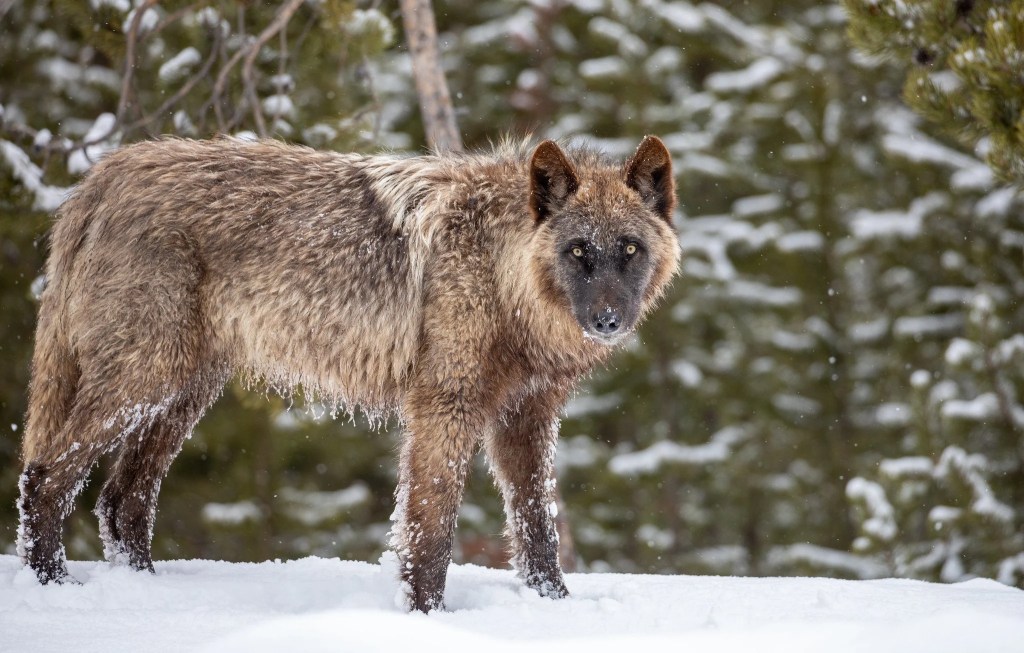
Villains are part of a healthy ecosystem. Have you ever watched a nature documentary about deer and found yourself rooting for the animal’s escape when confronted with a pack of hungry wolves? In this context, the wolves are the villains, however they are also apex predators. Apex predators are animals that maintain order in their ecosystems. They keep prey numbers in check.
If you know anything about the trophic scale, then you have no doubt heard about how the reintroduction of wolves into Yellowstone National Park changed the layout of the rivers. When wolves were hunted to near-extinction in the early 1900s, the elk population exploded. There were no wolves to hunt them, so they grew until they stripped the land of all valuable vegetation. Other species that ate plants to survive had to leave the area or they would face starvation. When those animals left, many of the other predators also left. The plants, whose roots had held the soil together, were gone and thus water could penetrate soil much more easily. Rivers changed shape, mudslides and other natural disasters became more common. The entire ecosystem had fallen into chaos. All of this because the wolves disappeared. If the villain is removed, the story suffers in its absence.
Villains are essential, even if we do not like them on a personal level. Villains bring conflict, conflict challenges heroes, and heroes create story through their actions. Going back to “Avatar,” if we remove Miles Quaritch, what happens to the first film? For one, Jake Sully, our protagonist, loses his internal conflict. He is paraplegic and wants to be useful. He wants to feel like he belongs. Jake Sully is a military man. When Quaritch gives him an opportunity to prove his “worth” to the Resources Development Administration (RDA), Sully is tempted. The military is all he knows, and this was the project his late twin brother had been assigned to. Genetically, Jake was made for this mission. And Quaritch is charismatic. He cares about the members of his team. He is, for lack of a better word, “cool.” In addition, Quaritch promises to use the RDA’s state-of-the-art technology to restore Sully’s ability to use his legs. However, when Jake’s morals begin to align with the native people of Pandora, it puts him at odds with Quaritch. If Quaritch was not part of the narrative, the RDA becomes a faceless organization with no personal ties to our hero. Ties—such as loyalty—which add a level of depth to our hero.
Additionally, Quaritch spearheads much of the destruction perpetrated by the RDA. The RDA itself is a stand-in for corporate greed, but Quaritch brings it to a whole new level. He is this world’s living representation of racial supremacy and pride. He does not care about the scientific breakthroughs that conquering Pandora will bring. He just wants to suppress the native people, and he’s having fun doing it. He is the one leading the human soldiers into battle. He is the one sending fire and ruin on the protagonists. He is evil. He is a villain. He is necessary.
My friend is of the opinion that Quaritch shouldn’t exist simply because he hurts the characters we care about. To her, it seems, protagonists should never come across harm or conflict because they do not deserve ill treatment. But that is Quaritch’s purpose. If he did not exist, then what happens to the stakes? The conflict? The consequences of the heroes’ actions? The answer is that nothing happens. There is no story. Villains are part of the ecosystem—the narrative—just as much as the heroes. They need each other to function.
When the wolves were reintroduced to Yellowstone, the ecosystem mended itself. The wolves controlled the elk population. Grasses and trees which had disappeared grew back. Beavers, songbirds, bears, squirrels, and many more returned home. The rivers stabilized. Yellowstone National Park once again flourished, and so will your stories if you have a good villain.
Discover more from Imagination's Pages
Subscribe to get the latest posts sent to your email.
 Imagination's Pages