You guys, I cannot stress enough how important it is for you to read consistently if you want to improve your writing. I’m of the opinion that being part of a critique group is the absolute best way to improve your writing as quickly and as reliably as possible. However, if you are not part of a critique group (and even if you are in one), you should read on a consistent basis to gain knowledge about how to improve your storytelling or prose or character development or anything else that goes into making a good book. If you never improve, you’re likely to start losing your edge, and you may not even realize it until someone edits your new manuscript.
This was a lesson I had been told year after year by writer friends, but I never truly took them seriously. I worried that if I read outside my genre, I would get bored and DNF the book. I also feared if I read too often, other people’s work would influence my stories in a way that would make them feel devoid of my style. However, it was only after I started reading consistently for the first time since high school that I gained a new perspective on why we should read other’s work.
Sometimes, we choose to revisit a book we loved in junior high/high school, and sometimes as we’re reading it, we see things we did not see before, and it’s not looking good. Suddenly, someone you used to praise as your favorite author is someone who’s books you can barely stand, and you learn what not to do when writing your own stories. This happened to me earlier this year. And then it happened again…and again…all with different book series from the same author.
The most disheartening part is this author is self-published, like me, and several of her books did not list an editor of any kind. However, that hardly seemed to make any difference as even books that did have an editor were still riddled with typos and other issues. I have never in my life thought I would read a book with over 200 typos in it (yes, I counted), among storytelling missteps, and inaccuracies in the book’s own worldbuilding. I don’t want to end up publishing something like that, and I doubt any of you want to either. I would be mortified.
I knew when I started to reread this author’s books that I would not find them as engaging as I once did when I was a teen, but I did not expect to find myself constantly being taken out of the story due to the numerous plot holes, out-of-character decisions, unlikeable characters who were meant to be likeable, and typos and formatting errors. It was exhausting to get through, but at the same time I wanted to stick it out because there were still moments I truly loved that I think this author did very well. As of writing this, the author has self-published four series and is working on their fifth. I managed to read through three of her four finished series, but I cannot continue without some kind of palate cleanser. Maybe once I’m feeling more refreshed I will finish what I started.
One thing I will always praise this author for is their imaginative premises, which often outshine the plots that rise from them. They draw heavy inspiration from old fairy tales, like those of the brothers Grimm, stories from other European countries, and various mythologies. I can tell this author has a passion for what they write, but I wish they would have invested more time into polishing their books before putting them out on the market. Every single one of her books reads like a first draft, not a finished story. I learned a very valuable lesson from revisiting these teen favorites. They still hold a special place in my heart, and now I have a new appreciation for them because I can see how much I’ve grown in my own craft thanks to my critique group.
Revisiting these series was a journey in and of itself. As I continue to revisit old favorites and dive into new books on my To-Read List, I hope to nourish my writing with new insights and ideas from talented, beloved authors. Dear reader (and writer!), thank you so much for your stay here! I hope you too will flourish in your writing by reading others’ work. Have a great one, and I’ll see you soon!
Every writer knows the crushing feeling that comes after you’ve explained your next writing project only for someone to respond with, “Oh, so it’s like ___!” It makes you defensive, because you know you came up with that idea on your own, right? There’s no way someone else had the exact same idea as you before, right?
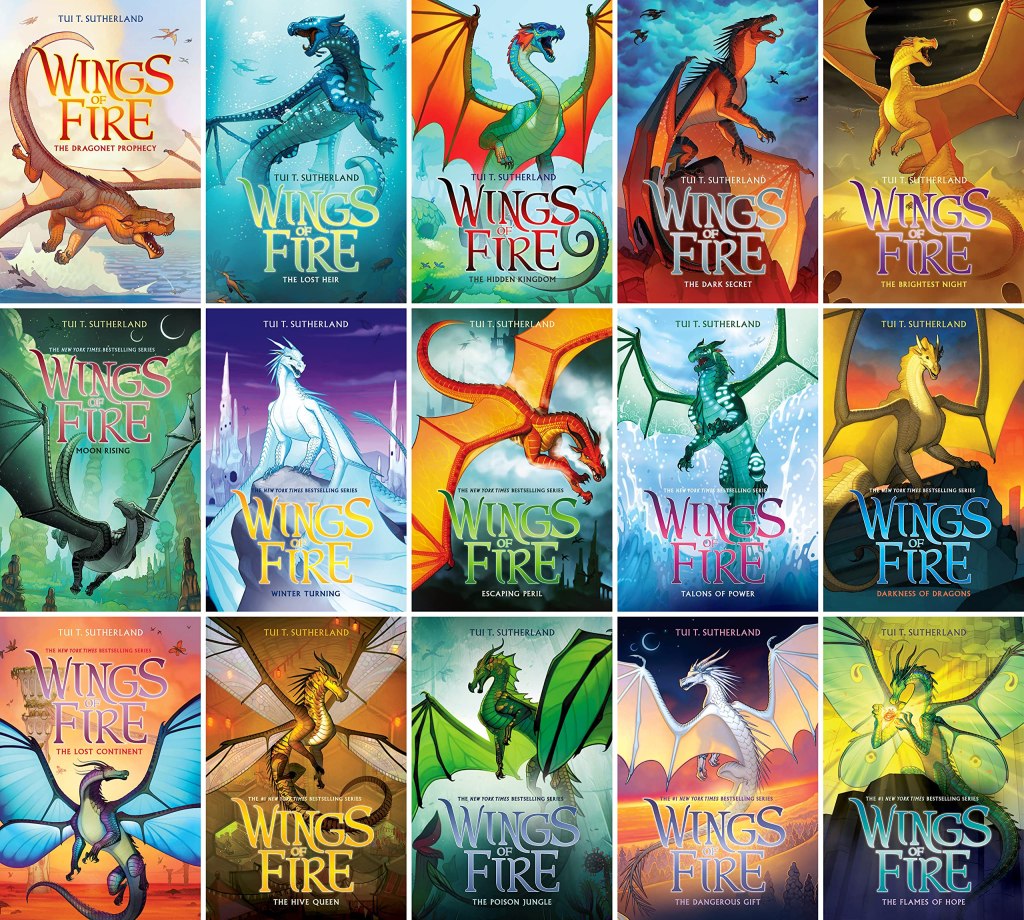
Here’s the thing: nothing is original anymore. Every piece of media is inspired by something else, but I’m sure you know that already. There’s no avoiding it, and I’ve been through it countless times before. One of my favorite authors is Tui T. Sutherland, who wrote the Wings of Fire series. There were pieces of her books that greatly inspired the worldbuilding in my novel and the sequels-to-come, but I began to notice something strange. I would be writing a plot point in Escapade and when Tui’s newest Wings of Fire bookcame out I would read it immediately, only to find that the very plot point I had just been writing days before was present in this new book. And it just kept happening. It was the oddest coincidence, and it helped me see that sometimes, writers just come up with similar storylines. Afterall, those storylines must be good if they get used so often.
Now it doesn’t bother me when someone compares my stories to other pieces of media. They’re not being malicious. They’re just trying to make a connection with you by showing you that they understand what your story is. But that’s not the main reason I’m writing this. I brought this up, dear reader/writer, because I wanted to remind you that it is perfectly okay to draw inspiration from other media. That doesn’t mean you should copy or plagiarize. All I’m saying is inspiration has a funny way of turning something you loved watching/reading/ listening to into something that fits your style.
When people ask me what my book is about, I want them to know about the plot, but also I want them to be aware of the story’s tone and emotional beats. In order to keep from rambling, I end up just saying, “Oh, it’s like if you mixed Robin Hood, Tarzan, and the Swan Princess and set it in a fantasy world where dragons are sapient beings, just like humans!”
<~> And, hint hint, this is also a good marketing strategy, because chances are someone could see what inspired your story and say, “Hey, I like those things, so I’ll probably like this book, too!” <~>
Obviously, I drew inspiration from a lot of other pieces of media for individual characters, settings, storylines, and more, but that would be too much to go into. Just know that Escapade‘s DNA is complex and even I forget everything that inspired its creation. My protagonist, Fendrel, alone was inspired by so many little things that it’s hard to keep track of how I developed him from first draft to the final published work.
Inspiration is such an amazing feeling and I wish I could feel it more often. When I do, it hits like a drug. It makes me want to sit down with my keyboard and write until my stream of consciousness has run out of words. Sometimes it comes on suddenly by watching a certain movie, and other times I can induce the feeling by listening to a particular song.
<~> I’m a huge fan of different genres of music, and making playlists for individual characters or for the story as a whole is a fantastic way to get me excited about writing again! You should try it out, if you haven’t before. <~>
But what do you all do when you need to be inspired? Do you go outside or watch a comfort movie/show? Do you watch video essays of people talking about something that fuels their passion for storytelling? I’m curious to know!
Thank you for staying, dear reader! Happy writing if you write, and happy reading for all (seriously, though, if you’re a writer you NEED to read in order to keep your skills sharp). I hope you all have a great one!
In my freshman year of high school, I began writing my debut novel, previously titled The Dragon’s Treasure on Wattpad, of all places. I had written a “book” before in 8th grade, but that was technically a school assignment. This, though, was something I had chosen to do thanks to an idea I’m sure was given to me by God.
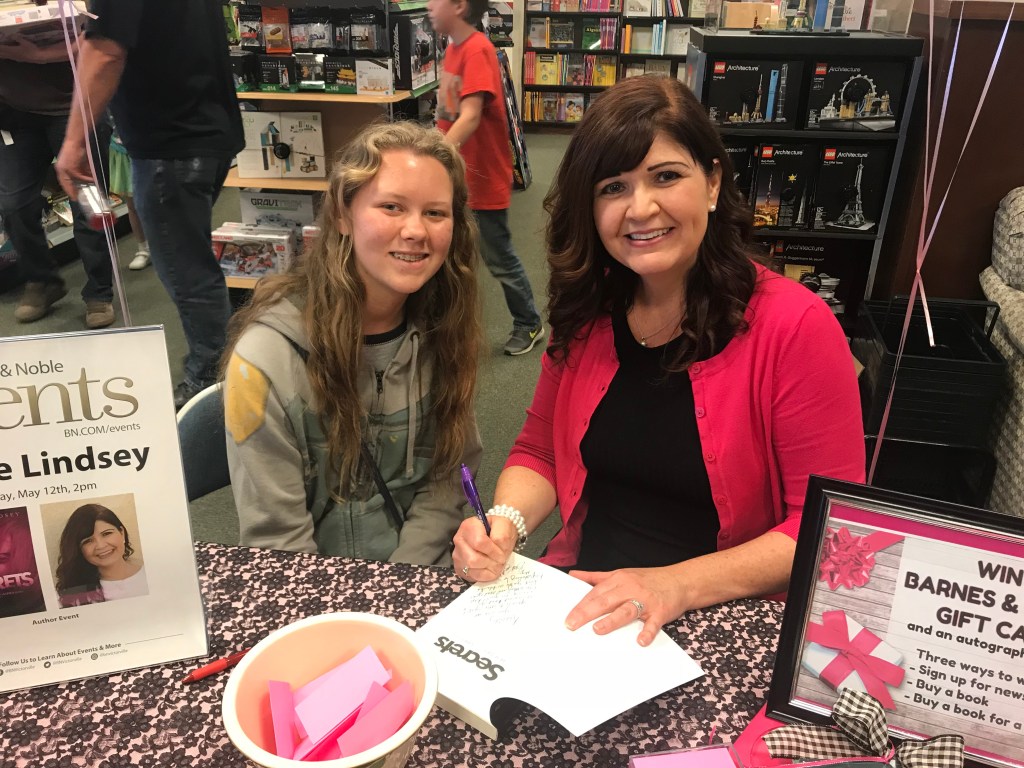
In my sophomore year of high school, my mom asked me if I was interested in being a beta reader. That was the first time I had heard the term and I learned it meant that I would read a book and give my thoughts to the author before it was published. I was reluctant to accept, but Mom said the would-be author was her friend and Bible study leader, Beckie Lindsey. Even though I’m not a fan of contemporary fiction, I felt compelled by the Spirit to become a beta reader. There was something about the request that I just couldn’t say no to. When I took on the role, I suspected nothing more than to read the book, write down notes as I went, and send the notes to Beckie through an email. But once I finished it, she wanted to talk with me in person.
We met in a local Starbucks. I was nervous, obviously. This was a woman I had never met before, and a real writer. I didn’t want to say anything that would offend her. I didn’t want to say she could improve in some areas because I didn’t want to come off like I knew everything. It’s very hard for me to read expressions, so when Beckie’s face shifted in the middle of me giving her my notes, I feared the worst. She shook her head incredulously, looked between me and my Mom, and asked, “Wait, wait. Are you a writer?”
I didn’t know how to answer. Sure, I had written stories before, but nothing like what she had done. The most I had ever written was the first draft of The Dragon Liberator: Escapade, and I was ridiculously embarrassed of my lack of experience. It wasn’t true that I was a full-blown writer, at least not in my mind, but I had written something. I simply replied with, “A little.”
Typing this now, after having just finished her series last night, I am reminded of just how much that first meeting with Beckie meant to me. Her main protagonists–four high school girls who become friends despite their differences–were constantly hanging out in their local coffee shop, The Grind. Whether they were there for hours or for a couple minutes just to catch up, they always found themselves in that building. I wonder now if Beckie chose to invite me to that Starbucks because she loved coffeehouses, or if she invited me there because she knew this meeting was going to be special. If that little nudge the Holy Spirit gave me to read her books was noticeable for me, a constant prodigal child, then it was no doubt obvious for Beckie, a woman whose faith knew no bounds. She probably didn’t know why that meeting would be special, why God brought us into each other’s lives, until she asked me that question.
Faith is a strange thing. At times my faith has made me feel safe no matter what happened and other times my faith made me feel like a flag holding onto its pole in the middle of a storm. There are several times in my life where I was unsure of what God wanted me to do. But, when Beckie asked me if I wanted to join her critique group, I knew God wanted me to say yes.
But, I wanted to say no. I was embarrassed of my writing, my ideas, my characters, my world building, everything. I didn’t talk about my writing much because I feared if people knew I was writing they would want to read it, and then they would be disappointed in my lack of experience. I wanted to tell Beckie no, because joining a critique group meant she would read every word, and she would have criticisms. But I knew I would be wrong to refuse.
The next couple of years flew by with me going to critique group once every two weeks, always on a Tuesday, and always worried that I was going to hear about how much the other ladies hated my story. I was always wrong. The other members were older than me with the youngest being in her twenties and the rest being in their forties or older. We all wrote different genres and it seemed as though I was most of these ladies’ first introduction to fantasy. They never ran short in compliments, and I almost never believed them. I was a high schooler, after all. How good could I really be? I would tell myself “I know my story has problems. They just can’t see them because they don’t read fantasy. They don’t see how awful my book truly is.”
I didn’t have confidence in my abilities back then, something I still struggle with, and because of that I didn’t give as much critiquing advice as I wanted to. While reading Beckie’s books for the first time since she passed, I couldn’t help but feel like I should have done better by her. I should have gave her more input. I should have spoken my mind more. I wanted and still want her books to be perfect, but they’re already done. It’s been seven years since I first met Beckie, and every time I saw her I learned something new about writing and faith. I wish that back then I had the experience and confidence that I do now. But even still, her books are pretty good. I’m just a harsh critic, especially of myself.
Beckie was my biggest cheerleader. Even when we couldn’t meet up because of quarantine restrictions or because of her sickness, she always pushed me to seek publication. She believed in my story and she knew people would love it if only they knew it existed. I know now more than ever that God gave me that nudge to be a beta reader so Beckie and I could be in each other’s lives, if only for a handful of years.
Beckie passed from stage 4 ovarian cancer in March 2024. She was diagnosed in January 2021, 1 year after her brother and sister-in-law passed in a car accident. She dedicated her fourth and final book to them, saying “See you soon.” When she wrote that, I don’t think she understood just how soon “soon” would be. Beckie was a fighter. She wasn’t afraid to admit that the cancer and chemo were weighing on her, but her faith was stronger. She touched so many lives while she was on earth, and I believe that it was part of God’s plan for her and me to work with and encourage each other.
I reread her books in an effort to find something to remember her by, and it wasn’t hard to do so. While writing her series, Beckie often told me how she was a lot like Krystal, one of the main four characters, when she was a teen due to her cynicism and sarcastic personality. But in her wisdom, her nurturing, and her faith I see her as Lauren, the central mentor figure. I wish I had told her that when she was still here.
Beckie loved Jesus, her family, coffee, and cats, all in that order. Her personality is all over these books, and so is the message she worked so hard to put out: we are all God’s children, no one is too broken to be saved, and we are all beautiful.
I don’t know how far my voice will reach, but if you’re a teen or perhaps you know a teen, I think you should check out her work! All four of Beckie’s books are available at Amazon under the series title “Beauties From Ashes” and the last three books of her series are available at Barnes & Noble. I’d like to share the synopsis of the first book, Secrets, with you:
“Mackenzie is the shy, awkward new girl at school, depressed and desperate for a real friend. When she stumbles upon the deepest secret of a sarcastic, angry-at-the-world track star, Krystal, they become instant enemies–especially about the flirtatious baseball player, Bryce.
Tammi, a gloomy singer/musician who couldn’t care less about what others think of her, meets Sadie, a dancer and a people-pleaser with a cotton candy disposition. They have nothing in common until their lives begin to collide in more ways than one.
As the girls’ worlds begin to converge, their secrets rather than their similarities draw them together. Meanwhile, all that’s kept hidden has left them vulnerable to a battle in an invisible realm where demonic creatures fight to keep the girls chained to their pasts while angels of light work to free them.
Can good ever come from evil? Can beauty ever arise from ashes?”
“To all who mourn in Israel, he will give a crown of beauty for ashes, a joyous blessing instead of mourning, festive praise instead of despair.”
Isaiah 61:3, NLT
Beckie’s books were all about overcoming our flaws and insecurities through community. It takes time, and I’m still battling with mine, but I am nowhere near as scared to share my stories as I was eight years ago. I know that’s all thanks to Beckie, and to God for bringing her into my life.
That’s all from me for now. Thank you, dear reader, for spending time here. I pray that you have an amazing day, week, month, and beyond.
If you’re like me, then when you first heard the term “NaNoWriMo,” you thought it was just one of those no-stakes challenges people take part in, no different from making a New Year’s resolution. I was introduced to NaNo by my eighth grade English teacher. He made it one of our assignments, but it wasn’t something we would be graded on; he just wanted us to have fun. And I did!
If it weren’t for that teacher, I doubt I would have developed a love for writing as early as I did (I say that about a lot of people, but it’s true).
In short, NaNoWriMo (National Novel Writing Month) is an annual writing challenge where participants are encouraged to write the rough draft of a 50,000+ word novel during the month of November. Anyone can join whether they’re a seasoned author, they’re just starting out, or even if they’ve never written before. It’s a challenge, so it’s supposed to be difficult, but that doesn’t mean it can’t be fun. Countless writers, myself included, used this challenge to hone our skills, step out of our comfort zones, and share our progress with other participants. It’s a wonderful community-builder that spans globally.
S0, imagine my surprise when, 9 years after first hearing about NaNo, I found out there was a whole non-profit organization behind the challenge. Discovering this didn’t change how I felt about NaNo. Afterall, I’d been participating for years. Surely this November wouldn’t be any different… But then I saw the dreaded “NaNoWriMo Controversy” in an Instagram reel. My first thought was, “Why would someone cheat for an internet competition? That’s what the controversy is, right? Someone must have fudged their numbers in order to ‘win.'”
Wrong! The truth was nowhere near as innocent. I won’t go into exactly what happened, because it is a very uncomfortable subject, but if you want to seek the answer yourself, be warned!
After doing some research it turns out this non-profit, which also goes by the name NaNoWriMo, has had a lot of controversy over the years. Things like supporting scam publishers, making false promises to participants, discriminating against disabled volunteers, and not doing background checks on any of their volunteers which led to some safety issues. You can learn more from this video by Savy Writes Books, who interviewed former volunteers and participants of NaNoWriMo.
At this point I decided I wouldn’t be participating in NaNo for the foreseeable future, and then NaNo released a statement that cemented my stance. As a creative, one of my biggest fears is that someone will steal my ideas, but an even bigger fear is that AI will be the thief. How did AI get tangled up in a writing challenge? Let me break it down for you, dear reader.
One of NaNo’s sponsors is an AI resource called Pro Writing Aid, which NaNo actively encouraged its participants to use. One of PWA’s newest features is to generate text for its users, effectively writing for the writer. “But who cares?” you might be asking.
Maybe you don’t, but it matters a lot to writers. This is a challenge built off the honor system. If you’re just going to cheat your way through NaNoWriMo, then why are you even participating? With such AI resources, you could have a rough draft for a novel in minutes with little input from yourself. That is NOT writing. In addition, AI “learns” how to improve itself by studying the work of other writers, meaning AI is effectively plagiarizing, and so are you by using AI to write in your stead.
People were not happy with NaNoWriMo. If the organization had apologized and distanced themselves from PWA, they might not have such a big mess on their hands. But they decided to double down by releasing an article entitled “I can’t believe NaNoWriMo is endorsing a person/company who does _____!” This post is long enough, so I won’t get into it here, but if you want more insight, I suggest you check out this video by D’Angelo (I tried submitting quotes from the article itself, but NaNoWriMo edited it so heavily you cannot find any trace of their previous statements on AI users).
So, yeah, I’m not doing NaNoWriMo anymore, even if they go back on their stance regarding AI. I just can’t trust them, and neither can thousands of others. Now, you might have looked at the title and thought, “What is JaNoWriMo and why hasn’t Kass gotten to it yet?”
JaNoWriMo (January Novel Writing Month) is a lovely idea a writer friend of mine pitched on her Instagram. It is similar to NaNoWriMo, but instead of being a challenge to write 50,000+ words in a single month, JaNo focuses on writers building community with each other and sharing our stress-free writing progress.
JaNo is a time of inspiration, encouragement, advice, and cozy vibes. November is such a hectic month with Thanksgiving and preparing for Christmas. Really it’s one of the worst months of the year to hold a writing challenge, especially since stress often gives me burnout and stumps my creativity. January, however, is after all the hustle and bustle of the previous year, and it marks the beginning of a new one! Why not start 2025 with something to boost community and creativity?
If you want to learn more, check out @rebekah.ackerman.writes, the wonderful writer who pitched this idea, on Instagram. She seriously deserves the engagement!
Thank you for reading, friends! Happy reading and happy writing, without AI, of course. 😉

 Imagination's Pages