Just last month, I was chatting with a friend. Over lunch, we started discussing James Cameron’s “Avatar” films, and it was through this discussion that I recognized a divide in how we approach media. I, for one, love the art of building a whole story. I love how all the characters interact with each other. I love seeing the world change because of the characters’ actions and how their arcs progress over time. Without characters, there is no story. I love villains for this specific reason. My friend, on the other hand, HATES villains. That doesn’t seem like a problem at first. Villains are meant to be hated. They are the antagonist, the opposition, the enemy. They have values that directly contrast with the heroes. Villains are meant to be hated because of what they do and what they represent, but if villains did not exist, then the story would not exist either.
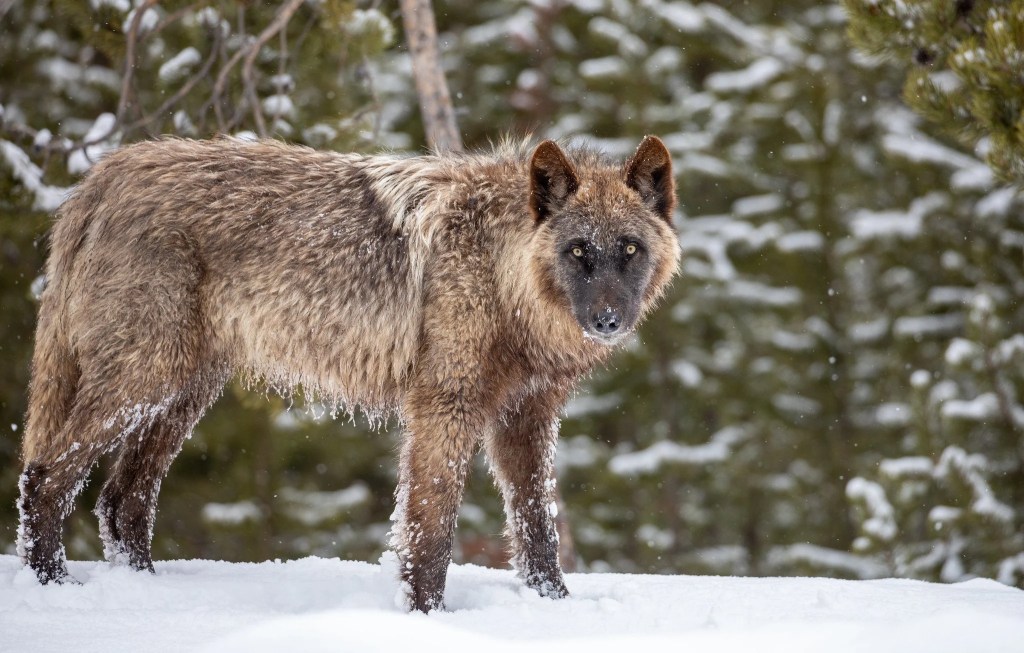
Villains are part of a healthy ecosystem. Have you ever watched a nature documentary about deer and found yourself rooting for the animal’s escape when confronted with a pack of hungry wolves? In this context, the wolves are the villains; they are also apex predators. Apex predators are animals that maintain order in their ecosystems. They keep prey numbers in check.
If you know anything about the trophic scale, then you have no doubt heard about how the reintroduction of wolves into Yellowstone National Park changed the layout of the rivers. When wolves were hunted to near extinction in the early 1900s, the elk population exploded. There were no wolves to hunt them, so they grew until they stripped the land of all valuable vegetation. Other species that ate plants to survive had to leave the area or they would face starvation. When those animals left, many of the other predators did as well. The plants, whose roots had held the soil together, were gone and thus water could penetrate the soil much more easily. Rivers changed shape, mudslides and other natural disasters became more common. The entire ecosystem had fallen into chaos. All of this because the wolves disappeared. If the villain is removed, the story suffers.
Villains are essential, even if we do not like them on a personal level. Villains bring conflict, conflict challenges heroes, and heroes create a story through their actions. Going back to “Avatar,” if we remove Miles Quaritch, what happens to the first film? For one, Jake Sully, our protagonist, loses his internal conflict. He is paraplegic and wants to be useful. He wants to feel like he belongs. Jake Sully is a military man. When Quaritch gives him an opportunity to prove his “worth” to the Resources Development Administration (RDA), Sully is tempted. The military is all he knows, and this was the project his late twin brother had been assigned to. Genetically, Jake was made for this mission. And Quaritch is charismatic. He cares about his teammembers. He is, for lack of a better word, “cool.” In addition, Quaritch promises to use the RDA’s state-of-the-art technology to restore Sully’s ability to use his legs. However, when Jake’s morals begin to align with the native people of Pandora, it puts him at odds with Quaritch. If Quaritch were not part of the narrative, the RDA would become a faceless organization with no personal ties to our hero. Ties—such as loyalty—that add a level of depth to our hero.
Additionally, Quaritch spearheads much of the RDA’s destructive actions. The RDA itself is a stand-in for corporate greed, but Quaritch brings it to a whole new level. He is this world’s living representation of racial supremacy and pride. He does not care about the scientific breakthroughs that conquering Pandora will bring. He just wants to suppress the native people, and he’s having fun doing it. He is the one leading the human soldiers into battle. He is the one sending fire and ruin on the protagonists. He is evil. He is a villain. He is necessary.
My friend believes Quaritch shouldn’t exist simply because he hurts the characters we care about. To her, it seems, protagonists should never come across harm or conflict because they do not deserve ill treatment. But that is Quaritch’s purpose. If he did not exist, what would happen to the stakes? The conflict? The consequences of the heroes’ actions? The answer is that nothing happens. There is no story. Villains are part of the ecosystem—the narrative—just as much as the heroes. They need each other to function.
When the wolves were reintroduced to Yellowstone, the ecosystem mended itself. The wolves controlled the elk population. Grasses and trees that had disappeared grew back. Beavers, songbirds, bears, squirrels, and many more returned home. The rivers stabilized. Yellowstone National Park once again flourished, and so will your stories if you have a good villain.
Hi there dear reader! For anyone returning, thank you for coming back for more. And for anyone new, welcome! My name is Kass, I’ve been writing fantasy for 10 years, I am the self-published author of “Escapade,” and I am dipping my toes into horror as well. This is something I have been wanting to do for a little while now and I finally got around to writing the first part of a short form horror series involving paleo-accurate dinosaurs coming back to life in modern day America. I wanted to post the first part of it here for you to enjoy. Any feedback and encouragement is greatly appreciated! Without further ado…
<~><~><~>
JILL. MONTANA.
Hey everyone. I’m Jill, 25, and you’re about to read some stuff I wrote in my journal recently. I was keeping this to myself for a while, but, none of that matters now. Everyone’s going through the same shit and putting my thoughts out there for other people is gonna help me keep my sanity (maybe, hopefully).
12:05 PM. JAN 31. Something just came out of my kitchen floor? I don’t know what the hell it is. It looks like bone. It wasn’t there when I went to sleep last night, but when I came down this morning there was this lump beneath my tiles. I thought at first a pipe had burst or maybe there was an earthquake during the night. I picked up the broken tiles with my hands, cut myself (I know, dumb idea), and immediately dropped them when I saw what broke through.
It sounds crazy and a little stupid, but there’s like, the skeleton of a baby dinosaur in my kitchen. It looks like one of those triceratops things. Kinda cute in a weird way, especially with how the tile almost looked like pieces of eggshell. If I wasn’t so pissed about having to hire a repairman I might have been sad at how young it was when it died. It’s so small it probably doesn’t even rival a cat and its horns look like little tic-tacs. I think I’m gonna call it that. Maybe I’ll put it in the garden as a neat little decoration. I don’t know. But anyway…it’s weirding me out. I feel like something is about to happen.
3:20 PM. Hey, so, I guess this has been happening to other people too. So much so that there are articles about this shit. I found one called, “Scientists SHOCKED at influx of resurfacing fossils.” These things are cropping up everywhere. In people’s backyards, under roads, along beaches, like everywhere. What’s even weirder that the article pointed out, something I noted but didn’t put much thought behind, is that these things are emerging undamaged. Despite the millions of years or however long they were buried and no matter how deep down, these fossils are showing up like they had always been on the surface. No scratches, no missing pieces, no aging.
That was even more strange, so I tried looking for more news. I stumbled on this one: “Carbon dating shows new fossils to be geologically younger than expected.” They were interviewing a paleontologist and he was talking about how these fossils that he and other scientists knew were from prehistoric times were found to be only a couple million years old, then thousands of years old, then hundreds, and younger and younger with each new fossil they studied.
The news must have spread pretty quick because I got a call from my uncle who skipped over any helloes and went straight into telling me this was God’s way of proving to mankind that the earth was actually a lot younger than scientists said. I’m not a scientist, so what the hell do I know? I barely made it through high school and with my luck I’ll barely make it through community college too. Well, anyway, I’m getting off track.
Tic Tac, the baby dino that hatched through my floor, looks like it died pretty recently. Its bones are white and in perfect condition (at least, from what I can tell). I ended up wrapping her (I don’t care what it was when it was alive, Tic Tac is a girl now and no one can tell me otherwise) in an old blanket and carried her to my garden. It’s just a planter box with some flowers and a few frog-themed decorations, but I still put effort into it. You guys can call me stupid or crazy or whatever, but it felt wrong carrying the bones in small handfuls. I didn’t want to separate them, hence the blanket, which has now been rehomed to the dumpster. Maybe Tic Tac will like the view haha. Kinda like how families bury their loved ones on hills as if they can see where they were laid to rest. Alright, I’m getting too morbid. Talk later.
5:15 PM. FEB 8. What the fuck. Okay, so… Shit, where do I start? I haven’t written in a while because I was just watching for a bit but this is all getting too freaky. I let Tic Tac sit in the planter box and checked on her once a day. I didn’t bother calling anyone about picking her up. All the museums around here have their hands full collecting the more impressive bones, so I didn’t think they’d want a baby triceratops.
Whenever I went to water my flowers, I’d say hi to her (don’t judge me). She was mostly covered from my sight by the flowers so I never really got a good look at her until I realized about two days in that there was mud on her. I thought maybe an animal had snuck over my fence and buried her a bit but there were no holes and the mud was sort of clay-like? I don’t have cameras, so I couldn’t check to see what had happened. Anyways, I was doomscrolling and saw a new article. I thought it was bullshit at first, until I checked on Tic Tac again and realized the article was telling the truth.
All the fossils were being recovered, but not like the earth was trying to bury them again. It was like the mud was moving on its own and shaping itself to look like skin and scales and shit. Pebbled scales are what the scientists call what triceratops had (they have a mummy triceratops somewhere?). Tic Tac has the scales too. She even has eyelids, chubby wrinkles around her joints, and there are rocks where her horns, beak, and hooves (?) used to be.
But it gets weirder. Last night I went out to water my plants, and spy on Tic Tac (because what the hell was going on with her), and I swear to God she was warm. Warm like a living thing, and her clay skin didn’t feel like clay any more. I stared at her for a while and I think my mind was playing tricks on me because it looked like her chest was expanding with shallow breaths. I chalked it up to me being tired and went to bed early. This morning, I remembered what I saw and decided to look at Tic Tac with fresh eyes, but she was gone.
I looked through my whole planter box to see if she had moved, but like, she couldn’t have, right? She’s dead. She’s been dead for millions of years. At least, she should have been. Someone must have taken her. I had half a mind to knock on my neighbors doors and ask them if one of their kids jumped my fence, but thought better of it. I just moved here. I don’t need anyone’s first impression of me to be an accusation that their kids were trespassing. I resolved to just…look at the news again, something that had now become part of my daily routine. My stomach turned.
Tic Tac was too small, too light, to leave any footprints in my planter box, but bigger animals left evidence of them wandering off. Maybe if I wasn’t such a loser chud I would have found out sooner, but I was inside when my neighbors discovered where all the bones went. I found out tonight.
Before the sun set too far, I knew something was wrong. Just outside my window, I could see, smell, and hear a massive group of clay triceratops marching down my street. Their mud looked like real skin now, and maybe it was. Their horns looked real, their goat-pupiled eyes scanned their surroundings, and they lowed to each other like fucking cows. They were huge. The adults’ heads were as big as I am tall. I can still feel their collective stomps through my floor and the pictures on my walls are shaking. These things are shoving peoples’ cars aside and grunting at the high-pitched alarms. They smell sooo bad, like, they’re still dead but trying not to be. I’m crouched behind my window right now. I’ve seen videos of dumbasses in Yellowstone getting mauled for being too close to bison. I don’t want these monsters thinking they need to run me down.
So, uh, I called off work, which sucks because it was supposed to be my first day, and now I’m just sitting alone in my living room watching zombie dinos walk around. Anyway, all that aside, I’m really anxious right now. I just moved to Montana and if I had known all this freaky shit was gonna happen I never would have come here. Montana is home to Hell Creek, where most T rex fossils are found. If the triceratops are walking around, then so are those things, and whatever else broke through the ground. I’m fucked.
2:00 AM. FEB 11. Never in my life have I been more glad to be dating a nerd. Kurt and I met in freshman year. He’s cute, a little dorkish, and we’ve been long distance since I moved to Montana, but now he’s coming to stay with me. Hopefully forever. I don’t want to be here alone and I’ve sort of burned a lot of bridges with my family, so, Kurt’s all I got. He’s definitely autistic, in like, the stereotypical way with dinosaurs and shit. He’s probably losing his mind right now in a good way while I’m losing mine in the normal way. I’m hoping he’ll be able to help me make sense of everything going on, and talk my ear off about the zombie dinos that live near me. I’m gonna need his “expertise.”
10:00 AM. FEB 11. Kurt’s here. On his drive over he told me to stay inside, as if I would go out. I guess there are these flying dinos called quetzalcoatlus around here? Don’t even ask me how to pronounce that shit. I had a hard enough time spelling it. Anyway, Kurt told me they’re not actually dinosaurs, they’re just “flying reptiles.” I told him “I don’t care what they are. They have six-foot long beaks and are as tall as a damn giraffe.” I’m keeping my 5’4” ass inside.
<~><~><~>
I will be updating this as I get more inspiration. Thank you, dear readers, for reaching the end. I hope you enjoyed and I hope you come back for more writing!
P.S. If anyone is on Reddit, I also posted this in the subreddit that inspired me to finally get to writing this. If it’s no trouble, I’d love an upvote from you and maybe a little comment to get more eyes on this story.
You guys, I cannot stress enough how important it is for you to read consistently if you want to improve your writing. I’m of the opinion that being part of a critique group is the absolute best way to improve your writing as quickly and as reliably as possible. However, if you are not part of a critique group (and even if you are in one), you should read on a consistent basis to gain knowledge about how to improve your storytelling or prose or character development or anything else that goes into making a good book. If you never improve, you’re likely to start losing your edge, and you may not even realize it until someone edits your new manuscript.
This was a lesson I had been told year after year by writer friends, but I never truly took them seriously. I worried that if I read outside my genre, I would get bored and DNF the book. I also feared if I read too often, other people’s work would influence my stories in a way that would make them feel devoid of my style. However, it was only after I started reading consistently for the first time since high school that I gained a new perspective on why we should read other’s work.
Sometimes, we choose to revisit a book we loved in junior high/high school, and sometimes as we’re reading it, we see things we did not see before, and it’s not looking good. Suddenly, someone you used to praise as your favorite author is someone who’s books you can barely stand, and you learn what not to do when writing your own stories. This happened to me earlier this year. And then it happened again…and again…all with different book series from the same author.
The most disheartening part is this author is self-published, like me, and several of her books did not list an editor of any kind. However, that hardly seemed to make any difference as even books that did have an editor were still riddled with typos and other issues. I have never in my life thought I would read a book with over 200 typos in it (yes, I counted), among storytelling missteps, and inaccuracies in the book’s own worldbuilding. I don’t want to end up publishing something like that, and I doubt any of you want to either. I would be mortified.
I knew when I started to reread this author’s books that I would not find them as engaging as I once did when I was a teen, but I did not expect to find myself constantly being taken out of the story due to the numerous plot holes, out-of-character decisions, unlikeable characters who were meant to be likeable, and typos and formatting errors. It was exhausting to get through, but at the same time I wanted to stick it out because there were still moments I truly loved that I think this author did very well. As of writing this, the author has self-published four series and is working on their fifth. I managed to read through three of her four finished series, but I cannot continue without some kind of palate cleanser. Maybe once I’m feeling more refreshed I will finish what I started.
One thing I will always praise this author for is their imaginative premises, which often outshine the plots that rise from them. They draw heavy inspiration from old fairy tales, like those of the brothers Grimm, stories from other European countries, and various mythologies. I can tell this author has a passion for what they write, but I wish they would have invested more time into polishing their books before putting them out on the market. Every single one of her books reads like a first draft, not a finished story. I learned a very valuable lesson from revisiting these teen favorites. They still hold a special place in my heart, and now I have a new appreciation for them because I can see how much I’ve grown in my own craft thanks to my critique group.
Revisiting these series was a journey in and of itself. As I continue to revisit old favorites and dive into new books on my To-Read List, I hope to nourish my writing with new insights and ideas from talented, beloved authors. Dear reader (and writer!), thank you so much for your stay here! I hope you too will flourish in your writing by reading others’ work. Have a great one, and I’ll see you soon!
Every writer knows the crushing feeling that comes after you’ve explained your next writing project only for someone to respond with, “Oh, so it’s like ___!” It makes you defensive, because you know you came up with that idea on your own, right? There’s no way someone else had the exact same idea as you before, right?
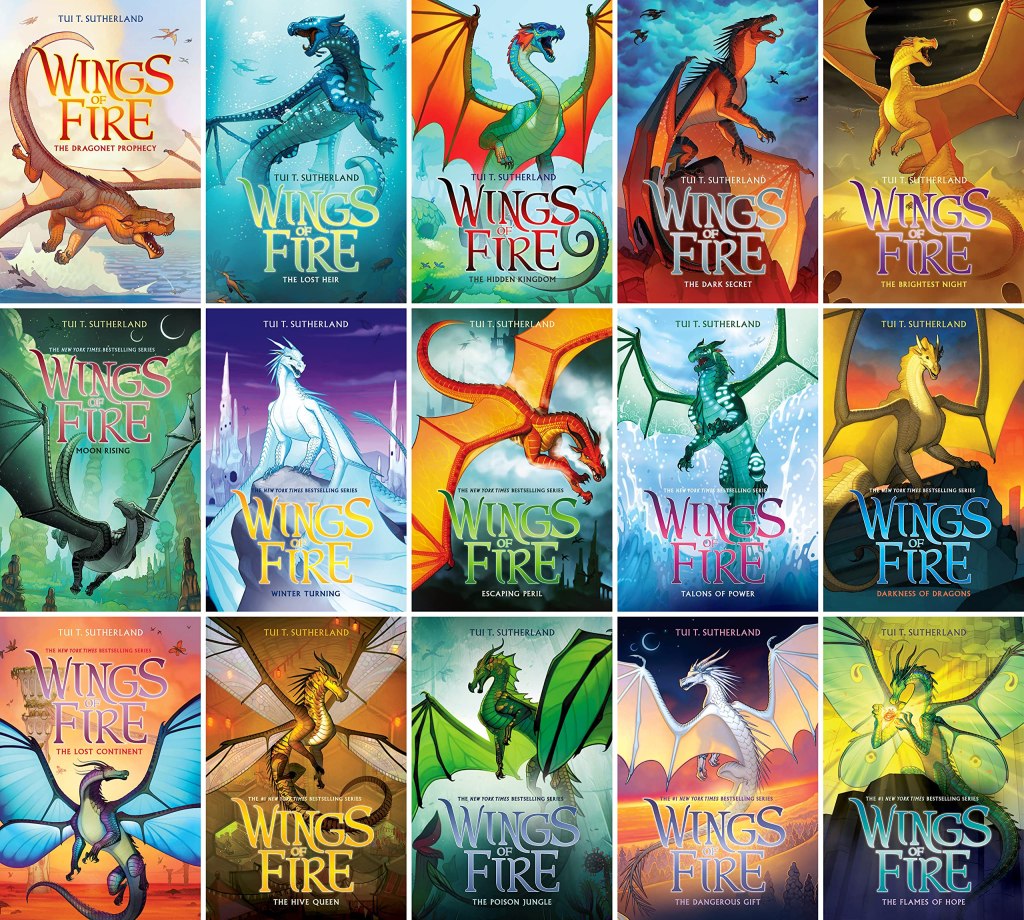
Here’s the thing: nothing is original anymore. Every piece of media is inspired by something else, but I’m sure you know that already. There’s no avoiding it, and I’ve been through it countless times before. One of my favorite authors is Tui T. Sutherland, who wrote the Wings of Fire series. There were pieces of her books that greatly inspired the worldbuilding in my novel and the sequels-to-come, but I began to notice something strange. I would be writing a plot point in Escapade and when Tui’s newest Wings of Fire bookcame out I would read it immediately, only to find that the very plot point I had just been writing days before was present in this new book. And it just kept happening. It was the oddest coincidence, and it helped me see that sometimes, writers just come up with similar storylines. Afterall, those storylines must be good if they get used so often.
Now it doesn’t bother me when someone compares my stories to other pieces of media. They’re not being malicious. They’re just trying to make a connection with you by showing you that they understand what your story is. But that’s not the main reason I’m writing this. I brought this up, dear reader/writer, because I wanted to remind you that it is perfectly okay to draw inspiration from other media. That doesn’t mean you should copy or plagiarize. All I’m saying is inspiration has a funny way of turning something you loved watching/reading/ listening to into something that fits your style.
When people ask me what my book is about, I want them to know about the plot, but also I want them to be aware of the story’s tone and emotional beats. In order to keep from rambling, I end up just saying, “Oh, it’s like if you mixed Robin Hood, Tarzan, and the Swan Princess and set it in a fantasy world where dragons are sapient beings, just like humans!”
<~> And, hint hint, this is also a good marketing strategy, because chances are someone could see what inspired your story and say, “Hey, I like those things, so I’ll probably like this book, too!” <~>
Obviously, I drew inspiration from a lot of other pieces of media for individual characters, settings, storylines, and more, but that would be too much to go into. Just know that Escapade‘s DNA is complex and even I forget everything that inspired its creation. My protagonist, Fendrel, alone was inspired by so many little things that it’s hard to keep track of how I developed him from first draft to the final published work.
Inspiration is such an amazing feeling and I wish I could feel it more often. When I do, it hits like a drug. It makes me want to sit down with my keyboard and write until my stream of consciousness has run out of words. Sometimes it comes on suddenly by watching a certain movie, and other times I can induce the feeling by listening to a particular song.
<~> I’m a huge fan of different genres of music, and making playlists for individual characters or for the story as a whole is a fantastic way to get me excited about writing again! You should try it out, if you haven’t before. <~>
But what do you all do when you need to be inspired? Do you go outside or watch a comfort movie/show? Do you watch video essays of people talking about something that fuels their passion for storytelling? I’m curious to know!
Thank you for staying, dear reader! Happy writing if you write, and happy reading for all (seriously, though, if you’re a writer you NEED to read in order to keep your skills sharp). I hope you all have a great one!
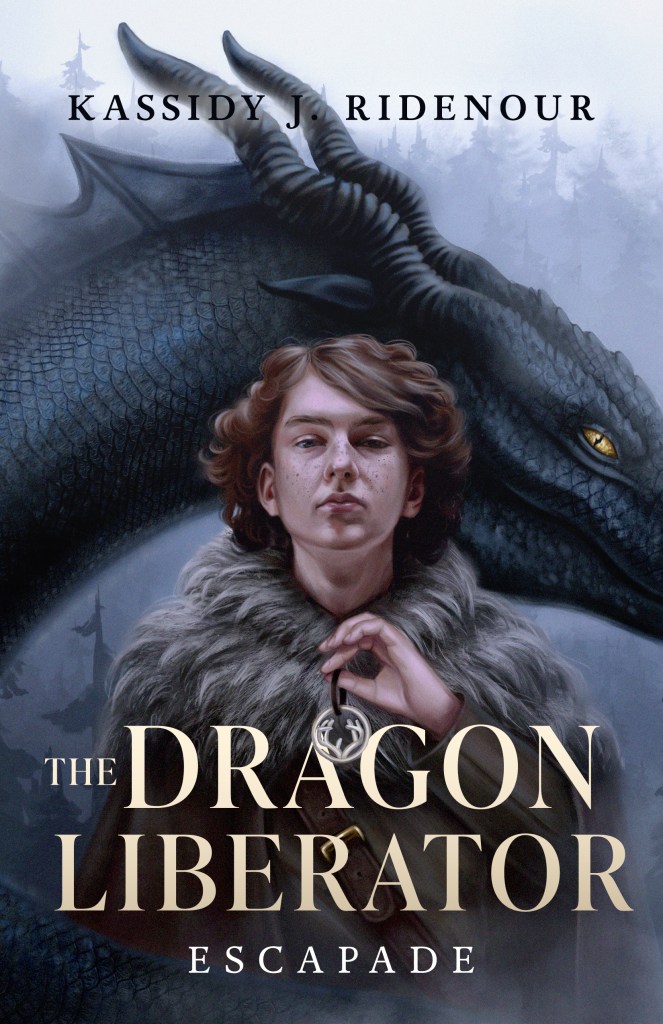
***SPOILERS for my debut novel, The Dragon Liberator: Escapade***
One of the things I learned while writing my debut novel is that I connected a bunch of plot threads without meaning to. For instance, I wanted two pivotal characters to form a friendship and was struggling with figuring out how to get them to see eye-to-eye. That’s when I realized that I had accidentally written their backstories to reflect each other. Both characters lost their mothers in the same tragic event, and this realization on my protagonist’s part (and mine as well) caused him to see the other person for who he truly was. It was the perfect way to get them to sympathize with each other despite their circumstances.
My novel is littered with examples just like the one above. It was like my brain subconsciously filled the plot holes for me when I was crafting the timeline, and I am very lucky it all worked out the way it did. I’m not so sure I’ll get that lucky again.
I didn’t outline Escapade. I identified as a “pantser,” someone who flies by the seat of their pants and has very loose ideas for how the story is going to play out. Of course, I knew the overall plot I wanted to write, but all the connecting scenes were improvised. This is part of the reason why it took me so long to write Escapade. I was afraid that if I outlined my story (every plot beat, every chapter, every scene) I would feel stuck and would go into writer’s block. I believed that “outlining” meant creating a path I was not allowed to diverge from for any reason lest it ruin the rest of the story’s events. The truth is I had never even tried outlining before, so I defaulted to believing I was a pantser.
I couldn’t have been more wrong.
I have a goal to finish the first draft of my novel’s sequel by the end of this year, 2025. In order to do this, I knew I had to be consistent, which is hard to do when you’re improvising every scene like I had been doing for years. I had to outline for the very first time, and I was skeptical if it would work for me. I love making lists and plans for myself, with chores and hobbies and schedules galore, but my brain has never taken to any of them for long. Well, as you can see from the title, I thought I was a pantser, but I’m actually a planner (or at the very least someone in the middle, but still leaning more toward “planner”).
This does not mean that I am trapped on a self-made railroad. It just means I have a guideline, or as I like to call it, the bones of a story, that I can add muscle and organs and flesh to as I further develop the book’s events. I thought outlining would feel like pulling teeth, but it, along with using my Freewrite (love that thing), has boosted my work ethic. I find myself writing at least three days a week all while still doing school work, going to work, reading consistently, maintaining a social life, and keeping up with my other hobbies. I have never felt to healthily productive in my writing time before now.
And it’s all thanks to a YouTuber and fellow self-published author I discovered through a friend. Abbie Emmons is a young woman who has writing/publishing /editing lessons you can pay for, but she also has an overwhelming wealth of free knowledge through her YouTube channel of the same name. If it were not for her, I would not have outlined my second novel as well as I did. It took a while to get through all of her advice, but that advice is absolutely necessary if you want to outline your story in such a way that limits the amount of developmental editing later on.
Her outlining works wonderfully for any fiction-based genre, for stand-alone books, and for series of books. If it were not for Abbie Emmons, I would still be fooling myself into thinking I was a pantser (and I probably wouldn’t be sitting at a lovely 46,000 words written so far).
I am making terrific progress. It’s only the third month of the year and Act I is already drafted and I’m well into Act II right now. Act II is the longest, so I wouldn’t be surprised at all if it takes me the majority of the year to complete, but luckily Act III (the last section) is the shortest of the three parts of the story. I have a plan of action. I have a helpful little color-coded roadmap. And, dear reader, I have a drive to get this book published in less than half the time it took me to write my debut novel. Happy reading and happy writing!
P.S. If you want to outline your novel in an organized, fun, and explorative way, I recommend you check out Abbie Emmons’ playlists on plotting a novel with the three-act structure, and how to outline a novel.
Hello dear reader! I wanted to share with you the first chapter for free of my debut novel. Maybe you’ll like what you see. 😉
This is epic fantasy, action/adventure with a little twist of mystery.
<~><~><~>
Chapter 1: Fendrel
Just keep a steady pace. Don’t make eye contact . . . There he is.
A grin tugged at the corner of Fendrel’s mouth. He snaked his way through buyers and sellers as he followed his target, inconspicuous to the bustling crowd. Fendrel thanked his short stature and hooded coat for keeping him hidden from searching eyes as he waded through the populous streets of Sharpdagger. Caribou fur coats were uncommon in this region, but Fendrel would take the discomfort of sweat over being discovered any day. To his delight, the capital of the human kingdom was tightly-packed, each denizen living oblivious to the shady dealings that run rampant around every corner.
Someone slammed into Fendrel’s shoulder as he passed. Out of instinct, he placed a protective hand on his bag. The leather was cracked, scratched, torn, and scorched over years of travel, but it had served Fendrel well.
“Be more careful where you step, boy!” the passerby barked, turning around. His anger turned to shock when he saw who he had knocked into. The man stood in silence until a wave of citizens separated the two from each other’s view.
Fendrel ducked his head. He had been recognized. It was only a matter of time before every knight in the city knew where he was. Panic pricked through Fendrel when he realized he had lost sight of his target. With a more frantic pace, he pushed onward, only breathing a sigh of relief when the suspicious figure once again caught his eye.
The target, a devil-like man named Sadon, stopped in his tracks. He, too, wore a long coat but cut from the body of a wolf and tailored with finer craftsmanship. Fendrel suspected it hid Sadon’s baldric, armed to the teeth with daggers. Sadon’s gray-streaked, blonde hair had been cropped short. Even from where Fendrel stood, he could tell the older man’s hair was cut professionally.
Has the royal guard become so lax that even Sadon can be preened here without the threat of arrest? Fendrel wondered as a look of disgust crept across his face.
Fendrel hid behind the corner of a building just as Sadon whipped his head around, his stern face scrutinizing everyone behind him. When Sadon grunted and continued on his path, Fendrel followed in his wake. He turned the corner just in time to see the well-dressed man disappear through a long alley. The stretch led to the side door of one of the tallest buildings in the city, second only to the Sharpdagger palace.
This must be some kind of storage house. Is it for weaponry? Or maybe items for trade?
He waited for Sadon to disappear inside, then maneuvered to the same entrance. The weathered door hung from the top hinge. When he pressed his ear against the door, it creaked slightly, but no one came to investigate.
Voices very familiar to Fendrel came from within the building. The first one—that of a middle-aged man named Charles—was a surprising comfort to hear, although Charles’ the soft-spoken tone made his words unintelligible.
The second voice was Sadon’s, speaking in awe. “Look at this monster. Those claws of hers will grant us a fortune.” There was a beat of silence, then Sadon spoke again. “Charles, hand me that snapper.”
Something inside the building hissed. It burst into an inhuman screech that chilled Fendrel to his bones and made him grit his teeth as if he were the one being tortured.
They must have used the snapper to break its wing.
Fendrel’s heart sank. He looked over his shoulder to see if anyone had heard the noise. He may have to forfeit the mission if his position was compromised. But it seemed as if no one had heard—or perhaps no one cared.
There’s a dragon in there, Fendrel thought as he turned his eyes back to the door. I wonder what tribe it’s from.
Two pairs of footsteps retreated deeper into the building. Fendrel listened until he heard a door inside the room slam shut. Perfect. He poked his head around the poor excuse for an entrance door to make sure no one else was there.
Only the dragon remained. Fendrel carefully opened the door a little more and slipped inside the expansive room.
Traps and snappers were stored in open wooden crates. Axes, arrows, spears, and swords lined the cobblestone walls. Amidst it all, in the center of the room, locked in a cramped cage, was one of the daintiest dragons Fendrel had ever seen. While small for a dragon, she was about the size of a horse. Fendrel’s eyes widened, and his breath caught in his throat as he noticed the dragon’s tribe.
Silver eyes peered at him cautiously, fearfully. The dragon cowered against the back of her cage. Her dark gray feathers curled at the edges like swirls of mist. Her smooth, shiny horns and claws were dangerously sharp. The dragon’s ears, long and fluffy like those of a donkey, were pinned flat against her long neck. One of the dragon’s wings bent at an unnatural angle, blood trickling from where the shattered bone penetrated her skin.
This was a Vapor dragon, classified by Sadon’s hunters as one of the least-dangerous dragons known to mankind. Fendrel was inclined to believe the rumors about them but kept his mind open. After all, this was the first time he had met one.
How long has she been here? Probably not long. Sadon wouldn’t let a dragon keep its claws unless he was busy.
When Fendrel shut the door behind him and stepped toward the cage, the dragon hissed and recoiled. Fendrel winced and waved his hands in front of him, shaking his head. He pointed at a set of double doors on the other side of the room, the only way the dragon hunters could have gone.
The dragon looked at the doors and stopped hissing. She must have presumed the hunters to be a worse enemy than Fendrel. After a moment, she returned her glare to the young man.
“I’m going to get you out of here,” Fendrel said, in the language of dragons, as he gave her a reassuring look.
With a noise of surprise, the dragon shoved herself farther back in her cage. There was a leather muzzle around her snout. Fendrel frowned and looked around at the weapons to see if there was anything he could use to break it. He doubted he would be able to use a snapper, not after the dragon had experienced the tool’s intended purpose. Spying a long metal staff with a hook attached to the end, he grabbed it.
Immediately, the dragon growled, wisps of mist curling from her nostrils and between her restricted jaws.
She won’t let me near her without me proving myself, will she?
Fendrel propped the staff up against the cage bars and reached under his shirt. He fished around for the necklace he showed to every dragon he rescued. Over the years, it had become something most dragons recognized, marking Fendrel as a sort of urban legend. His fingers closed around the smooth leather strap attached to a circular pendant carved from the bones of a caribou. Slowly, he lifted the necklace over his shirt.
Upon seeing the pendant, the dragon’s eyes widened. The mist’s descent ceased, and her noises subsided.
Fendrel tried to hide his smile. It was normal for him to be recognized by any common dragon, but not one as elusive as from the Vapor tribe. There was a reason most humans did not believe they existed.
He hid the necklace beneath his shirt and lifted the hooked staff. The dragon did not protest this time as Fendrel stuck the tool between the bars and hooked its end onto the muzzle. With one hand he held the staff, and with the other he unbuckled the strap that secured the muzzle around the dragon’s head. He began to pull the staff toward himself, and the dragon tugged her head in the opposite direction. Once the muzzle was left hanging around the hook, Fendrel set the staff down. The dragon scratched her snout with her talons, then moved her head to inspect her broken wing.
Fendrel looked at the lock on the cage to see if there was any way to break it. He sighed in annoyance. This metal was too strong to break or melt in any short amount of time. The lock would have to be opened. “Do you know what is past those doors?” Fendrel asked as he pointed to the doors through which the two hunters had left the room.
The dragon looked down at Fendrel with hesitation in her eyes.
“I know you can talk, and I know you can understand me.” Fendrel held his open hands out. “I don’t know what rumors the Vapor tribe may have about me, but surely you heard I speak Drake-tongue, right?”
“There . . . there are at least six other humans in this building. I can hear them moving boxes, but I do not know what is past the doors.” The dragon’s voice was soft and trembled with fright.
Fendrel sighed. He had freed dragons from hunters countless times before but never in this building. And to add to what could go wrong, Sadon was here.
He better not be the one holding the keys, or I may never get this dragon out of here, Fendrel thought.
“I’m sorry to leave you, but I have to find the key for this cage. I will be quick.” Fendrel placed a hand on the lock.
The dragon’s ears lowered in worry. “Please, be careful.”
With a nod, Fendrel turned to walk toward the set of double doors.
“What is your name?” The dragon raised her voice a bit. “My name is Fog.”
“Fendrel.” He gave Fog a polite grin, then continued on. When he reached the doors, he steeled himself with a deep breath.
He pushed one door open a crack and peeked inside. The sight that met him made him wish he had never come to the city.
<~><~><~>
If this little snippet interested you, you may want to get the book for yourself (or leave a review if you’ve read it already <3)! You can purchase it through Amazon, Barnes & Noble, or directly from me using this hyperlink or by scanning the QR code below.
In my freshman year of high school, I began writing my debut novel, previously titled The Dragon’s Treasure on Wattpad, of all places. I had written a “book” before in 8th grade, but that was technically a school assignment. This, though, was something I had chosen to do thanks to an idea I’m sure was given to me by God.
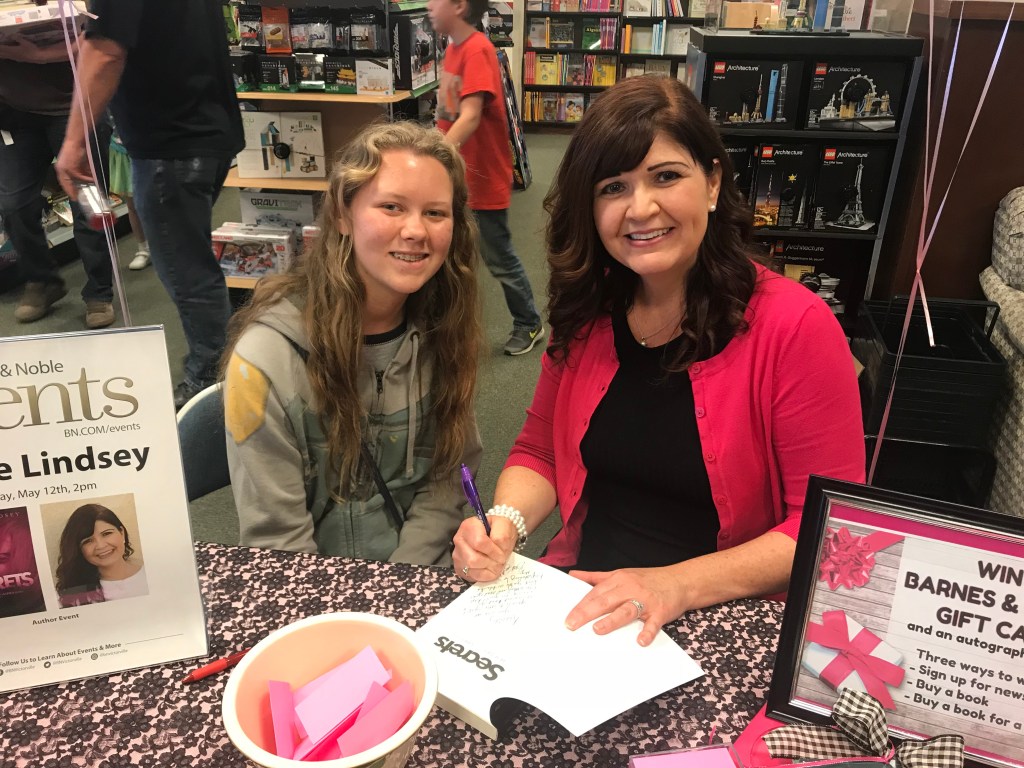
In my sophomore year of high school, my mom asked me if I was interested in being a beta reader. That was the first time I had heard the term and I learned it meant that I would read a book and give my thoughts to the author before it was published. I was reluctant to accept, but Mom said the would-be author was her friend and Bible study leader, Beckie Lindsey. Even though I’m not a fan of contemporary fiction, I felt compelled by the Spirit to become a beta reader. There was something about the request that I just couldn’t say no to. When I took on the role, I suspected nothing more than to read the book, write down notes as I went, and send the notes to Beckie through an email. But once I finished it, she wanted to talk with me in person.
We met in a local Starbucks. I was nervous, obviously. This was a woman I had never met before, and a real writer. I didn’t want to say anything that would offend her. I didn’t want to say she could improve in some areas because I didn’t want to come off like I knew everything. It’s very hard for me to read expressions, so when Beckie’s face shifted in the middle of me giving her my notes, I feared the worst. She shook her head incredulously, looked between me and my Mom, and asked, “Wait, wait. Are you a writer?”
I didn’t know how to answer. Sure, I had written stories before, but nothing like what she had done. The most I had ever written was the first draft of The Dragon Liberator: Escapade, and I was ridiculously embarrassed of my lack of experience. It wasn’t true that I was a full-blown writer, at least not in my mind, but I had written something. I simply replied with, “A little.”
Typing this now, after having just finished her series last night, I am reminded of just how much that first meeting with Beckie meant to me. Her main protagonists–four high school girls who become friends despite their differences–were constantly hanging out in their local coffee shop, The Grind. Whether they were there for hours or for a couple minutes just to catch up, they always found themselves in that building. I wonder now if Beckie chose to invite me to that Starbucks because she loved coffeehouses, or if she invited me there because she knew this meeting was going to be special. If that little nudge the Holy Spirit gave me to read her books was noticeable for me, a constant prodigal child, then it was no doubt obvious for Beckie, a woman whose faith knew no bounds. She probably didn’t know why that meeting would be special, why God brought us into each other’s lives, until she asked me that question.
Faith is a strange thing. At times my faith has made me feel safe no matter what happened and other times my faith made me feel like a flag holding onto its pole in the middle of a storm. There are several times in my life where I was unsure of what God wanted me to do. But, when Beckie asked me if I wanted to join her critique group, I knew God wanted me to say yes.
But, I wanted to say no. I was embarrassed of my writing, my ideas, my characters, my world building, everything. I didn’t talk about my writing much because I feared if people knew I was writing they would want to read it, and then they would be disappointed in my lack of experience. I wanted to tell Beckie no, because joining a critique group meant she would read every word, and she would have criticisms. But I knew I would be wrong to refuse.
The next couple of years flew by with me going to critique group once every two weeks, always on a Tuesday, and always worried that I was going to hear about how much the other ladies hated my story. I was always wrong. The other members were older than me with the youngest being in her twenties and the rest being in their forties or older. We all wrote different genres and it seemed as though I was most of these ladies’ first introduction to fantasy. They never ran short in compliments, and I almost never believed them. I was a high schooler, after all. How good could I really be? I would tell myself “I know my story has problems. They just can’t see them because they don’t read fantasy. They don’t see how awful my book truly is.”
I didn’t have confidence in my abilities back then, something I still struggle with, and because of that I didn’t give as much critiquing advice as I wanted to. While reading Beckie’s books for the first time since she passed, I couldn’t help but feel like I should have done better by her. I should have gave her more input. I should have spoken my mind more. I wanted and still want her books to be perfect, but they’re already done. It’s been seven years since I first met Beckie, and every time I saw her I learned something new about writing and faith. I wish that back then I had the experience and confidence that I do now. But even still, her books are pretty good. I’m just a harsh critic, especially of myself.
Beckie was my biggest cheerleader. Even when we couldn’t meet up because of quarantine restrictions or because of her sickness, she always pushed me to seek publication. She believed in my story and she knew people would love it if only they knew it existed. I know now more than ever that God gave me that nudge to be a beta reader so Beckie and I could be in each other’s lives, if only for a handful of years.
Beckie passed from stage 4 ovarian cancer in March 2024. She was diagnosed in January 2021, 1 year after her brother and sister-in-law passed in a car accident. She dedicated her fourth and final book to them, saying “See you soon.” When she wrote that, I don’t think she understood just how soon “soon” would be. Beckie was a fighter. She wasn’t afraid to admit that the cancer and chemo were weighing on her, but her faith was stronger. She touched so many lives while she was on earth, and I believe that it was part of God’s plan for her and me to work with and encourage each other.
I reread her books in an effort to find something to remember her by, and it wasn’t hard to do so. While writing her series, Beckie often told me how she was a lot like Krystal, one of the main four characters, when she was a teen due to her cynicism and sarcastic personality. But in her wisdom, her nurturing, and her faith I see her as Lauren, the central mentor figure. I wish I had told her that when she was still here.
Beckie loved Jesus, her family, coffee, and cats, all in that order. Her personality is all over these books, and so is the message she worked so hard to put out: we are all God’s children, no one is too broken to be saved, and we are all beautiful.
I don’t know how far my voice will reach, but if you’re a teen or perhaps you know a teen, I think you should check out her work! All four of Beckie’s books are available at Amazon under the series title “Beauties From Ashes” and the last three books of her series are available at Barnes & Noble. I’d like to share the synopsis of the first book, Secrets, with you:
“Mackenzie is the shy, awkward new girl at school, depressed and desperate for a real friend. When she stumbles upon the deepest secret of a sarcastic, angry-at-the-world track star, Krystal, they become instant enemies–especially about the flirtatious baseball player, Bryce.
Tammi, a gloomy singer/musician who couldn’t care less about what others think of her, meets Sadie, a dancer and a people-pleaser with a cotton candy disposition. They have nothing in common until their lives begin to collide in more ways than one.
As the girls’ worlds begin to converge, their secrets rather than their similarities draw them together. Meanwhile, all that’s kept hidden has left them vulnerable to a battle in an invisible realm where demonic creatures fight to keep the girls chained to their pasts while angels of light work to free them.
Can good ever come from evil? Can beauty ever arise from ashes?”
“To all who mourn in Israel, he will give a crown of beauty for ashes, a joyous blessing instead of mourning, festive praise instead of despair.”
Isaiah 61:3, NLT
Beckie’s books were all about overcoming our flaws and insecurities through community. It takes time, and I’m still battling with mine, but I am nowhere near as scared to share my stories as I was eight years ago. I know that’s all thanks to Beckie, and to God for bringing her into my life.
That’s all from me for now. Thank you, dear reader, for spending time here. I pray that you have an amazing day, week, month, and beyond.
If you’re like me, then when you first heard the term “NaNoWriMo,” you thought it was just one of those no-stakes challenges people take part in, no different from making a New Year’s resolution. I was introduced to NaNo by my eighth grade English teacher. He made it one of our assignments, but it wasn’t something we would be graded on; he just wanted us to have fun. And I did!
If it weren’t for that teacher, I doubt I would have developed a love for writing as early as I did (I say that about a lot of people, but it’s true).
In short, NaNoWriMo (National Novel Writing Month) is an annual writing challenge where participants are encouraged to write the rough draft of a 50,000+ word novel during the month of November. Anyone can join whether they’re a seasoned author, they’re just starting out, or even if they’ve never written before. It’s a challenge, so it’s supposed to be difficult, but that doesn’t mean it can’t be fun. Countless writers, myself included, used this challenge to hone our skills, step out of our comfort zones, and share our progress with other participants. It’s a wonderful community-builder that spans globally.
S0, imagine my surprise when, 9 years after first hearing about NaNo, I found out there was a whole non-profit organization behind the challenge. Discovering this didn’t change how I felt about NaNo. Afterall, I’d been participating for years. Surely this November wouldn’t be any different… But then I saw the dreaded “NaNoWriMo Controversy” in an Instagram reel. My first thought was, “Why would someone cheat for an internet competition? That’s what the controversy is, right? Someone must have fudged their numbers in order to ‘win.'”
Wrong! The truth was nowhere near as innocent. I won’t go into exactly what happened, because it is a very uncomfortable subject, but if you want to seek the answer yourself, be warned!
After doing some research it turns out this non-profit, which also goes by the name NaNoWriMo, has had a lot of controversy over the years. Things like supporting scam publishers, making false promises to participants, discriminating against disabled volunteers, and not doing background checks on any of their volunteers which led to some safety issues. You can learn more from this video by Savy Writes Books, who interviewed former volunteers and participants of NaNoWriMo.
At this point I decided I wouldn’t be participating in NaNo for the foreseeable future, and then NaNo released a statement that cemented my stance. As a creative, one of my biggest fears is that someone will steal my ideas, but an even bigger fear is that AI will be the thief. How did AI get tangled up in a writing challenge? Let me break it down for you, dear reader.
One of NaNo’s sponsors is an AI resource called Pro Writing Aid, which NaNo actively encouraged its participants to use. One of PWA’s newest features is to generate text for its users, effectively writing for the writer. “But who cares?” you might be asking.
Maybe you don’t, but it matters a lot to writers. This is a challenge built off the honor system. If you’re just going to cheat your way through NaNoWriMo, then why are you even participating? With such AI resources, you could have a rough draft for a novel in minutes with little input from yourself. That is NOT writing. In addition, AI “learns” how to improve itself by studying the work of other writers, meaning AI is effectively plagiarizing, and so are you by using AI to write in your stead.
People were not happy with NaNoWriMo. If the organization had apologized and distanced themselves from PWA, they might not have such a big mess on their hands. But they decided to double down by releasing an article entitled “I can’t believe NaNoWriMo is endorsing a person/company who does _____!” This post is long enough, so I won’t get into it here, but if you want more insight, I suggest you check out this video by D’Angelo (I tried submitting quotes from the article itself, but NaNoWriMo edited it so heavily you cannot find any trace of their previous statements on AI users).
So, yeah, I’m not doing NaNoWriMo anymore, even if they go back on their stance regarding AI. I just can’t trust them, and neither can thousands of others. Now, you might have looked at the title and thought, “What is JaNoWriMo and why hasn’t Kass gotten to it yet?”
JaNoWriMo (January Novel Writing Month) is a lovely idea a writer friend of mine pitched on her Instagram. It is similar to NaNoWriMo, but instead of being a challenge to write 50,000+ words in a single month, JaNo focuses on writers building community with each other and sharing our stress-free writing progress.
JaNo is a time of inspiration, encouragement, advice, and cozy vibes. November is such a hectic month with Thanksgiving and preparing for Christmas. Really it’s one of the worst months of the year to hold a writing challenge, especially since stress often gives me burnout and stumps my creativity. January, however, is after all the hustle and bustle of the previous year, and it marks the beginning of a new one! Why not start 2025 with something to boost community and creativity?
If you want to learn more, check out @rebekah.ackerman.writes, the wonderful writer who pitched this idea, on Instagram. She seriously deserves the engagement!
Thank you for reading, friends! Happy reading and happy writing, without AI, of course. 😉



 Imagination's Pages